How Long Does It Take to Powder Coat Wheels? What Affects Timing
The wheels are already off, or the car is lined up for a drop-off, and the question in your head is not whether powder is the right finish. You have usually settled that. What you need is a realistic window. How long does it take to powder coat wheels, and should you plan around the vehicle being down for an afternoon or something longer?
There is no single answer that fits every set. The spray and the oven cycle are only part of the job. Condition, the old finish, curb rash, extra coats, tire service, and when you arrive all change the calendar. At Proper Motion in Santa Fe Springs, qualifying jobs dropped off during the designated morning window may be completed the same day when the approved scope and the condition of the wheels allow it. That is not a promise that every set qualifies, and it is not a clock time you can assume over the phone.
This guide walks through what the timeline actually includes, what stretches it, when same-day is a fair thing to ask about, and what to send so the shop can give you a window that belongs to your wheels instead of a generic estimate.
How Long Does It Take to Powder Coat Wheels When the Job Is Straightforward?
Even a straightforward set is a sequence, not a single spray-and-go step. Tires come off. Each wheel is inspected. The old finish is stripped or blasted. The surface is cleaned and masked. Powder is applied and cured in the oven. The wheels have to cool before anything is remounted. Then the tires go back on, the set is balanced, and, if you brought the vehicle, the wheels go back on the car. Skip one of those stages, or rush the cooling, and you are not saving time. You are gambling with the finish.
That is why "how long does powder coating take" is a different question from how long the oven is on. The cure is real work, and it cannot be shortened just because you need the car that night. But the cure is also not the whole calendar. Wheels wait between stages. A second coat, if the finish calls for it, means another trip through the oven and another cool-down. Other jobs are already in the blast cabinet and the oven. The hands-on work can be only part of the day you are actually without the wheels.
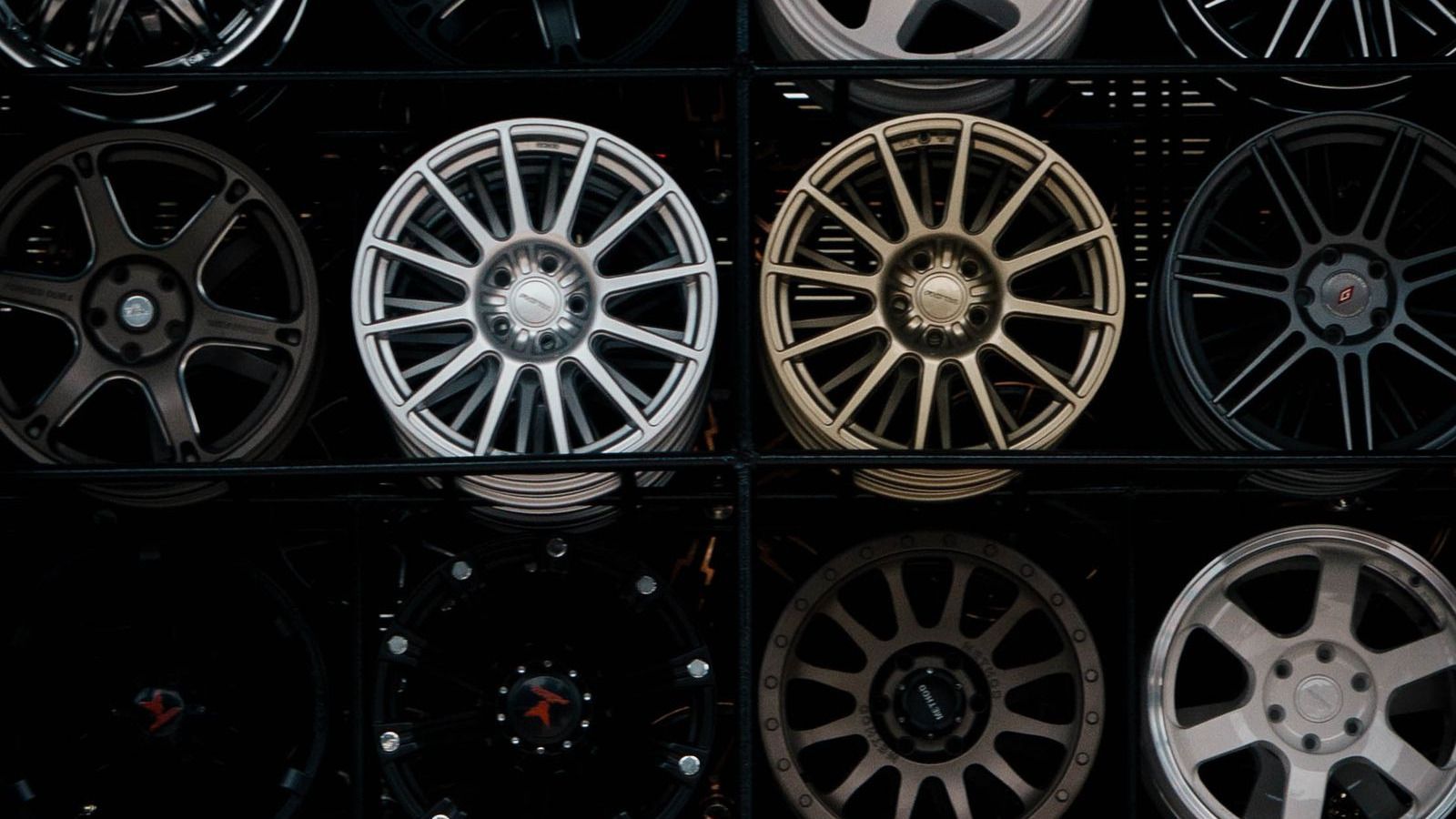
On a set that is in good condition, with a standard single-color finish, and with a drop-off that fits the shop's morning window, the published path at Proper Motion is same-day completion when the approved scope allows it. The wheel powder coating page describes that specialty clearly: qualifying projects dropped off during the designated morning window may be completed the same day, and qualifying scheduled jobs may be ready later the same day. If your set needs more repair, more coats, or a later arrival, the shop should tell you that before the work is promised, not after the wheels are already in process.
A useful way to think about the question is this: ask for a window that matches the condition of your wheels, not a number you heard from a different shop or a different job. Photos and a short description are usually enough to get that conversation started. The final window is confirmed once someone has the wheels in hand, because some problems only show up after the tires are off and the old finish is off.
What the Timeline Actually Includes
If you only remember the coating step, the whole job looks shorter than it is. Walking the sequence in order makes the wait easier to understand, and it also shows you which details are worth mentioning when you request a window.
Intake, tires, and inspection
The job starts before any powder comes out of the gun. If you are dropping off a vehicle, the shop can handle wheel removal as part of a turnkey visit. If you are bringing bare wheels, that step is already done, but the tires still have to come off unless you arrived with bare barrels. Valve stems, weights, center caps, and TPMS sensors need to be accounted for so they are not damaged in the oven or buried under a new coat.
Then comes the condition check. This is the step that decides whether the set is a straightforward refinish or something that has to slow down. Cosmetic issues, like light curb rash or failing clear, can often be planned into prep. Structural concerns are different. A bent or cracked wheel is not a timing problem first. It is a candidate problem. If you are still unsure whether your wheels should be refinished at all, the wheel refinishing guide is the right place to start, because condition has to be settled before anyone can talk honestly about a pickup time.
Stripping and surface prep
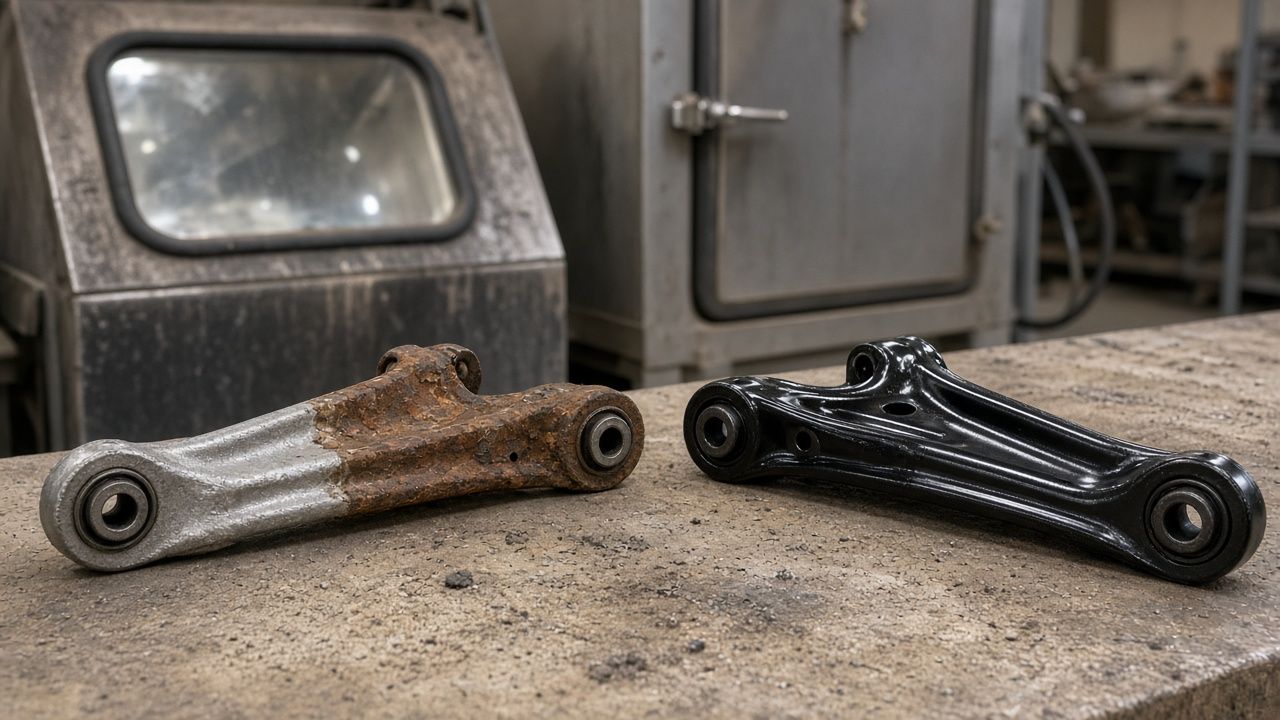
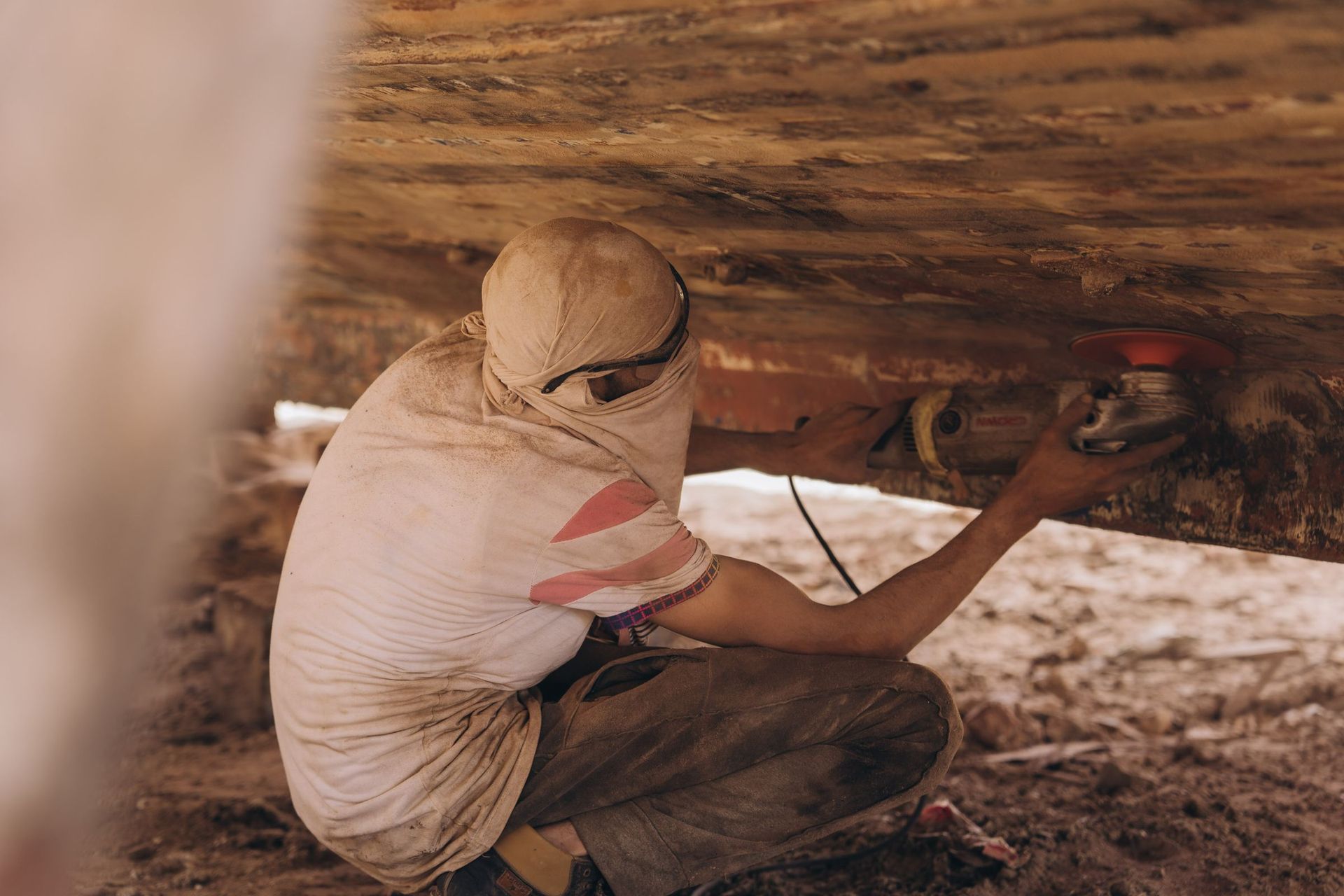
New powder does not belong on top of loose clear, rust, or a failing old coat. The existing finish has to come off, and the metal has to be cleaned and profiled so the new coat can bond. That may mean media blasting or another controlled strip, along with masking of lug seats, the center bore, and other surfaces that should stay bare. This is often the longest part of the work itself, especially on wheels that have been recoated before or that have brake dust and old finish baked into the barrel.
Prep is also where curb-rash work happens, when the damage is the kind that can be addressed before coating. Light rash can usually be blended during this stage. Deeper gouges take more finishing time, and that time is spent before the powder goes on, not after. If a wheel needs more repair than a cosmetic refresh, the calendar moves with it. The sandblasting and surface restoration page is the process side of that prep conversation. It is not a separate timing promise. It is the reason two sets that look similar in a driveway photo can take very different paths once they are in the shop.
Coating, curing, and cooling
Once the surface is ready, powder is applied electrostatically so it wraps the face and the barrel more evenly than a brushed or sprayed liquid coat usually can. The wheel then goes into the curing oven, where the powder melts, flows, and cross-links into the finished film. That cure has to run its course. Pulling a wheel early to save an hour is how you get a soft coat that chips.
If the finish is a simple single color, that may be one application and one cure. A clear over a base, a two-tone, or another multi-stage finish adds at least one more coat, one more cure, and another cool-down in between. The wheels also have to cool enough before tires are remounted. Mounting a tire on a wheel that is still too hot can mark or damage a fresh finish, which would undo the time you were trying to save.
Remounting, balancing, and pickup
The last stage is easy to forget and easy to undercount. Tires are remounted, the set is balanced, and, on a turnkey drop-off, the wheels can be reinstalled on the vehicle. Sensors and valves go back in correctly. A final look catches thin spots, debris in the coat, or a balance issue before you leave. This is part of the published wheel process, not an optional add-on you only discover at the counter.
Qualifying powder-coated wheel finishes carry a limited lifetime warranty against peeling and cracking, subject to the shop's written terms and exclusions. That coverage belongs to the finished, qualifying coat. It is not a reason to rush the cure or skip a cooling step.

What Changes How Long It Takes
Two sets of four wheels can look similar in a photo and still land on different windows. The difference is almost never the powder itself. It is what has to happen before and after the gun, and whether the job fits the shop's same-day path.
| Factor | Why it changes the timeline | What to tell the shop |
|---|---|---|
| Wheel condition | Cracks, bends, or heavy corrosion have to be evaluated before any finish goes on. A set that needs more than a cosmetic refresh does not move on the same path as a clean, intact set. | Describe any known bends, cracks, repairs, or previous damage. Send photos of the barrel and the face. |
| Old finish and how much has to come off | Thick paint, failing clear, or an existing powder coat has to be stripped or blasted before new powder can bond. That prep is often the longest part of the work itself. | Note whether the wheels are painted, clear-coated, already powder coated, or bare. Mention peeling or heavy brake-dust buildup. |
| Curb rash and face repair | Light rash can often be addressed during prep. Deeper gouges take more finishing work before coating, and that work happens before the powder goes on. | Point out the worst spots and say whether you want them repaired or left as character. |
| Finish choice | A standard single-color coat is a different scope than a multi-stage or two-tone finish, or a color that has to be sourced. Extra coats mean extra cure cycles and cooling time. | Name the color and sheen you want, or send a photo. Say if you need a two-tone or a clear over a base. |
| Tire, sensor, and drop-off scope | Turnkey work can include vehicle drop-off, tire dismounting, remounting, balancing, and reinstallation. That is more than coating the bare wheel, and it has to be scheduled with the finishing work. | Say whether you are bringing bare wheels or the whole vehicle, and mention TPMS sensors or special valves. |
| When you drop the wheels off | Qualifying jobs dropped off during the designated morning window may be completed the same day when the approved scope and the condition of the wheels allow it. Later arrivals and more complex sets follow a different window. | Ask for a window after the shop sees photos or the wheels, rather than assuming same-day applies. |
Condition is the first fork. A set with intact metal and light cosmetic wear can move through prep, coat, and cure on a tighter path. A set with unknown repairs, a possible crack, or heavy corrosion has to be evaluated before any finish is promised, and that evaluation can change both the scope and the pickup time. If a wheel is not a good candidate, no honest shop should coat over the problem just to hit a same-day target.
The old finish matters almost as much. A thin, failing clear comes off differently than a thick factory paint or an existing powder coat. The more that has to be stripped, the more time prep consumes. Wheels that have been refinished before, or that have years of baked-on brake dust in the barrel, usually need more of this work than a set that has been cared for and is only getting a color change.
Finish choice is the other common surprise. A standard gloss or satin in a color the shop already runs is a different scope than a multi-stage coat or a color that has to be sourced. Extra coats mean extra oven cycles and extra cooling. If you have a two-tone in mind, or a specific match that may not be on the shelf, say so early. That is not a reason to avoid the finish you want. It is a reason not to assume it fits the same window as a single-color refresh.
Scope off the wheel itself also changes the day. Bringing four bare wheels is not the same job as dropping off the vehicle for removal, refinishing, remounting, balancing, and reinstallation. Both are offered on the turnkey wheel service. The second one simply includes more steps that have to be scheduled with the finishing work. TPMS sensors, aftermarket valves, or a lock-nut key you forgot to bring can add a delay that has nothing to do with the powder.
Same-Day Service: Who Qualifies, and Who Should Plan Ahead
Same-day wheel powder coating is Proper Motion's primary specialty for qualifying jobs dropped off during the designated morning window. Qualifying projects may be completed the same day. Qualifying scheduled jobs may be ready later the same day. The approved scope and the condition of the wheels have to allow it.
The site does not publish a clock time for that morning window, or a list of colors that always qualify. If you are hoping the work is done the same day, the honest move is to ask when you send photos, then confirm the drop-off time the shop actually needs. Arriving later and hoping the set still slips into the same path is how people end up planning around a window that was never offered.
Jobs that usually need more calendar time are the ones with more prep or more process: heavier rash, more old coating to remove, a possible structural issue, a multi-stage finish, or a drop-off that misses the morning window. None of those is a judgment on the wheels. They are simply reasons the same-day path may not apply. The shop should say so up front once it has enough information, and you should leave room in your own plans until that confirmation exists.
If you have a second set of wheels, or can leave the vehicle, the planning gets easier. If you cannot, say that when you request the window. It does not change the process, but it does tell the shop you need a clear pickup time rather than an open-ended "we will see."
What to Photograph and Tell the Shop
A useful window starts with useful information. You do not need a professional photo shoot. You do need clear pictures and a few facts the shop cannot guess.
Photograph each wheel, face and barrel, in plain light. Get a close shot of the worst curb rash, any peeling or flaking finish, and any area that looks cracked, bent, or previously welded. If the tires are still on, include a shot that shows the tire size and the condition of the bead area. If you can, include a photo of the full set so it is obvious whether all four wheels match.
Then add the details that photos do not always capture: the vehicle year and model, the wheel size, the finish you want, whether the wheels are painted, clear-coated, already powder coated, or bare, and whether you are dropping off the vehicle or bringing wheels only. Mention TPMS sensors, aftermarket valves, lock nuts, or known prior repairs. If one wheel has a different history from the others, say that too.
The point is not to write a novel. It is to keep the first estimate from being built on assumptions. A set that looks clean from the face and is badly corroded in the barrel will not share a window with a set that is only getting a color change. The shop can usually see that in a good barrel photo. It cannot see it in a single glossy shot of the logo on the center cap.
Getting a Realistic Window on Your Wheels
How long it takes to powder coat wheels depends on the set in front of the shop, not on a single number that works for every job. The sequence is consistent: inspection, tires, prep, coat, cure, cooling, remount, and balance. What changes is how much work sits inside each of those stages, and whether your drop-off and scope fit the same-day path for qualifying morning jobs.
If you want a window that belongs to your wheels, send clear photos and the details above through the
free quote request. You can also call or text (714) 686-2306, or drop off at 14000 Rosecrans Ave, Santa Fe Springs, CA 90670 during published hours: Monday to Friday 6:00 AM to 7:00 PM, Saturday 6:00 AM to 4:00 PM, Sunday closed. Ask about same-day only if your timing actually depends on it, and treat the answer as confirmation for your set, not a blanket promise.