
Rust Removal Near Me: Assess the Metal Before You Recoat.
You usually notice it after a wet week, or after sprinklers have been hitting the same bottom rail all summer. Orange streaks bleed through old paint on a driveway gate. A trailer frame shows rust along the welds. A railing looks fine from the sidewalk until you lean on it and feel the scale move under your hand. If that is what sent you searching rust removal near me, the first question is not which color comes next. It is whether the metal is still worth saving, and what it will take to get the rust off without hiding a bigger problem.
Rust removal at a shop is not a wipe-down or a can of converter. It is an assessment, a stripping step matched to the condition of the metal, and in most cases a protective coating applied soon after the metal is bare. Proper Motion handles that work at 14000 Rosecrans Ave in Santa Fe Springs through its sandblasting and surface restoration service, then can move straight to powder coating because both steps live under one roof. If you are here about rusty wheels, that is a different process. The wheel powder coating page covers inspection, prep, and refinishing for wheels.
Is the Rusty Piece Even Worth Saving?
Rust alone does not rule a piece out. What matters is what the rust has done to the metal underneath, and you can get a rough read on that at home before you load the piece onto a truck.
Find the worst spot, the area where the rust is heaviest or where the paint has visibly failed. Press a thumbnail or the tip of a screwdriver into it, gently. If the rust flakes away and you feel solid, continuous metal underneath, that is ordinary corrosion, and the piece is often a candidate for stripping and recoating. If the metal feels thin, if it flexes under light pressure, or if your probe goes through and leaves a hole, the section may already be compromised. That does not automatically mean the whole piece is done, but it does mean the conversation shifts from recoating toward repair or replacement.
While you are checking, do three more things. Put your weight on the piece, or on the specific rail or joint in question, and check for wobble at the welds. Look for bends, cracks, or evidence of earlier repairs, especially patch plates and weld beads that were added by someone before you. Include that detail in the quote request. Photos of the worst areas tell a shop more than a wide shot of a freshly washed gate.
Some pieces simply are not good candidates. Rot-through in a load-bearing tube, section thickness that rust has already eaten away, cracked welds in structural locations, and patchwork that is failing again at its edges are all signs that stripping and coating would be money spent on a piece that will not hold up. Patio furniture follows the same logic; if a chair frame is solid, it is worth restoring, and the patio furniture powder coating page goes deeper on that specific category. This article stays on rust assessment and removal for the wider range of outdoor and shop metal.
Surface Rust, Scale, Pitting, and Rot-Through
Not all rust asks for the same work. Grouping what you see into a few condition tiers makes it easier to compare quotes and keeps you from treating a structural problem like a cosmetic one.
Surface rust or flash rust is an orange film or light bloom sitting on otherwise solid metal. Maybe the coating got scratched, maybe a corner got chipped, maybe a new piece of unfinished steel sat outside through one damp stretch of Southern California weather. This is the easiest condition to address: often a light blast or a thorough cleaning to bare metal, and then the piece is a good recoating candidate once it is clean.
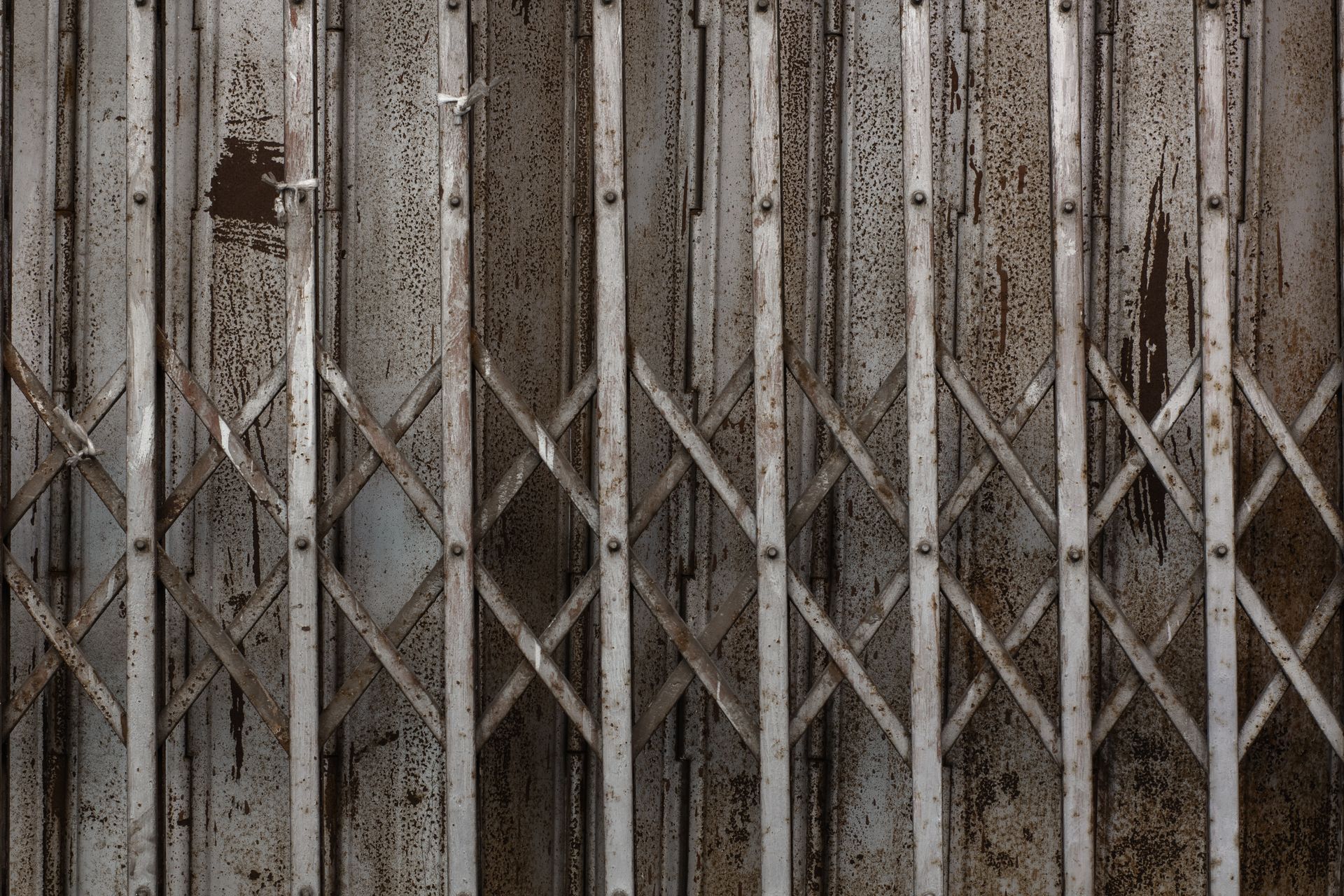
Failing paint with rust underneath is what you see when blisters form, paint peels in sheets, and rust bleeds out at edges and around fasteners. The paint has stopped doing its job, and the rust under it has been working quietly. This condition calls for a full strip and then a blast, and it is still a good candidate as long as the metal underneath remains sound.
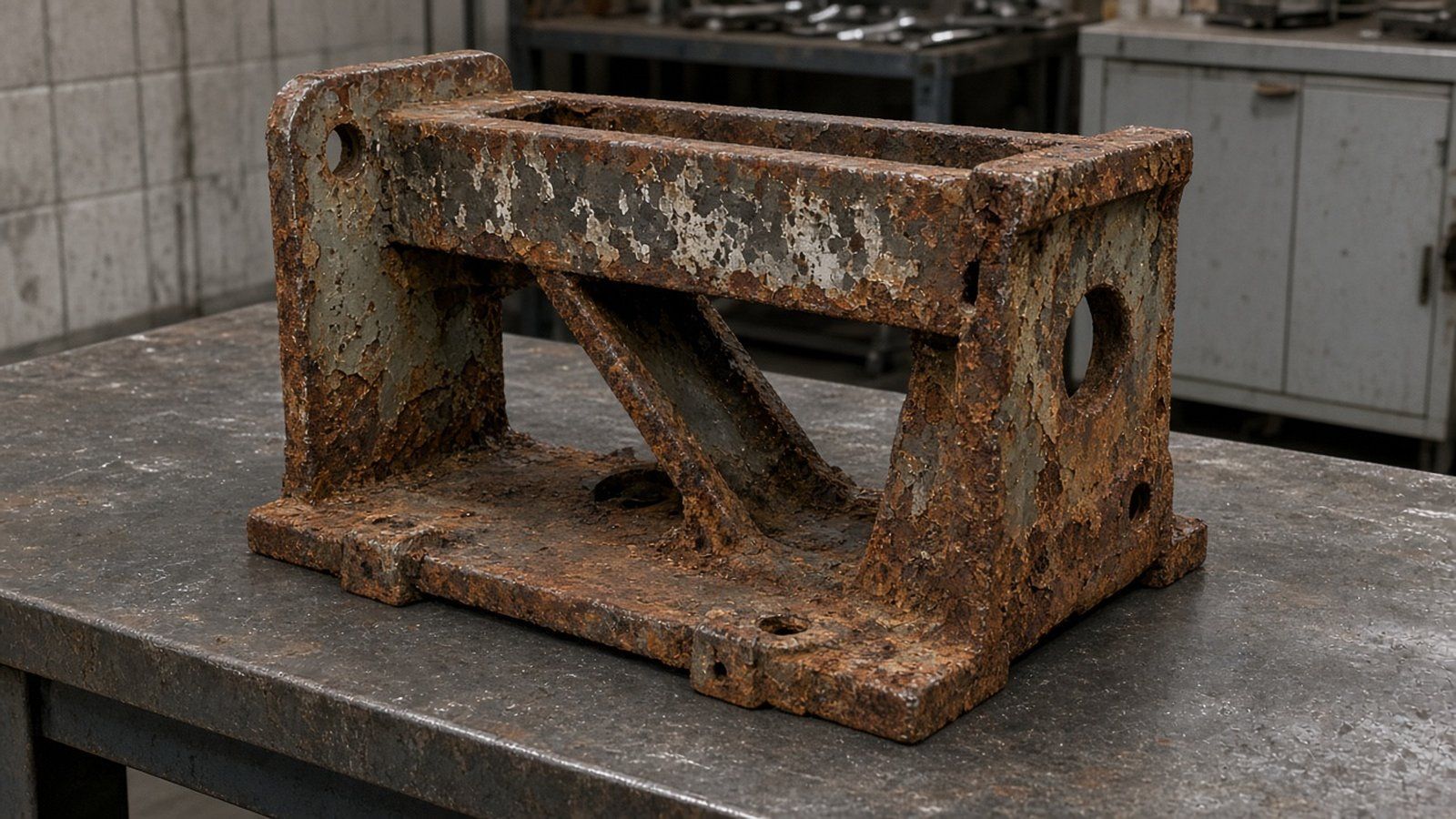
Scale and heavy rust is a step further. You get thick, flaking oxide, a dark crust, and rough, chewed-up corners and welds. This takes more aggressive blasting and a closer inspection afterward, because heavy scale can hide thinning. It is realistic to save these pieces when the remaining metal has not thinned through, but the inspection step matters more here than anywhere else.
Pitting shows up once the loose rust is gone. You see pinholes and small craters in the metal surface. Blasting reveals the surface and cleans it out, but it does not fill the pits, and coating does not truly fill them either. A good coating can protect pitted metal going forward, but the texture may still show in the finished piece, and it shows most under a high-gloss color. If you want a perfectly smooth finish over pitted steel, that is a different and more involved conversation.
Rot-through or failed repairs is the end of the line for the piece as-is. Holes in the metal, walls that have gone thin, cracked welds, and visible flex in the frame are conditions that removal will only expose more clearly. Once the rust and old paint are off, the piece may simply not be sound, and repair, fabrication, or replacement is usually the better path.
Rust Conditions at a Glance
| Condition | What you usually see | What rust removal typically involves | Recoating outlook |
|---|---|---|---|
| Surface rust or flash rust | Orange film or light bloom on otherwise solid metal | Often a light blast or thorough cleaning to bare metal | Usually a good candidate once the metal is clean |
| Failing paint with rust underneath | Blisters, peeling, rust bleed at edges and fasteners | Full strip of the old coating, then blast to clean metal | Good candidate if the metal underneath is still sound |
| Scale and heavy rust | Thick flaking oxide, dark crust, rough corners and welds | More aggressive blasting and a closer inspection afterward | Realistic if the remaining metal has not thinned through |
| Pitting | Pinholes and rough craters once loose rust is gone | Blast to reveal the true surface; pits are not filled | Coating can protect, but the texture may still show |
| Rot-through or failed repairs | Holes, thin walls, cracked welds, flex in the frame | Removal will expose that the piece may no longer be sound | Repair, fabrication, or replacement may be the better path |
What Rust Removal Near Me Includes at a Shop
When people picture rust removal services, they often imagine either a chemical soak in a vat or a long weekend with an angle grinder in the driveway. A shop job is usually something different. It starts with inspection of the piece as it arrives, then addressing loose hardware, then removing rust and failed coatings down to a clean, profiled surface, then checking the metal again before any color conversation happens. Two gates can look nearly identical from ten feet away and need very different work, and the quote is built from that difference.
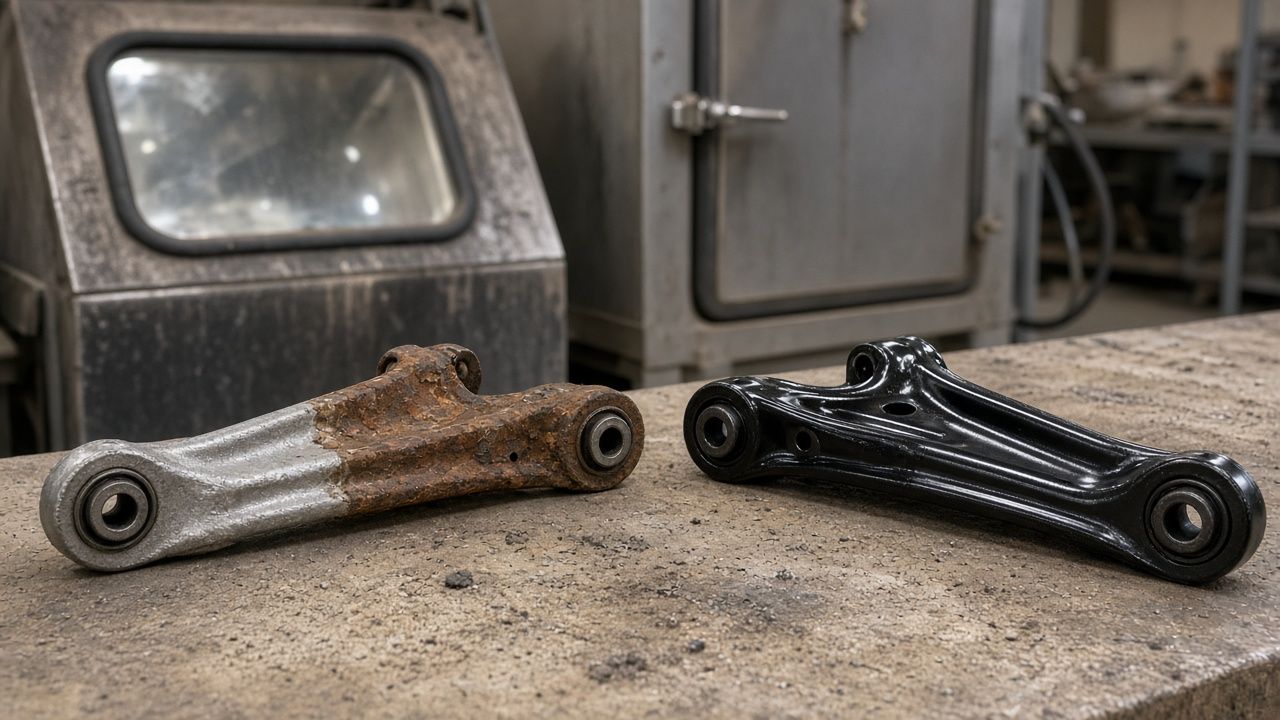
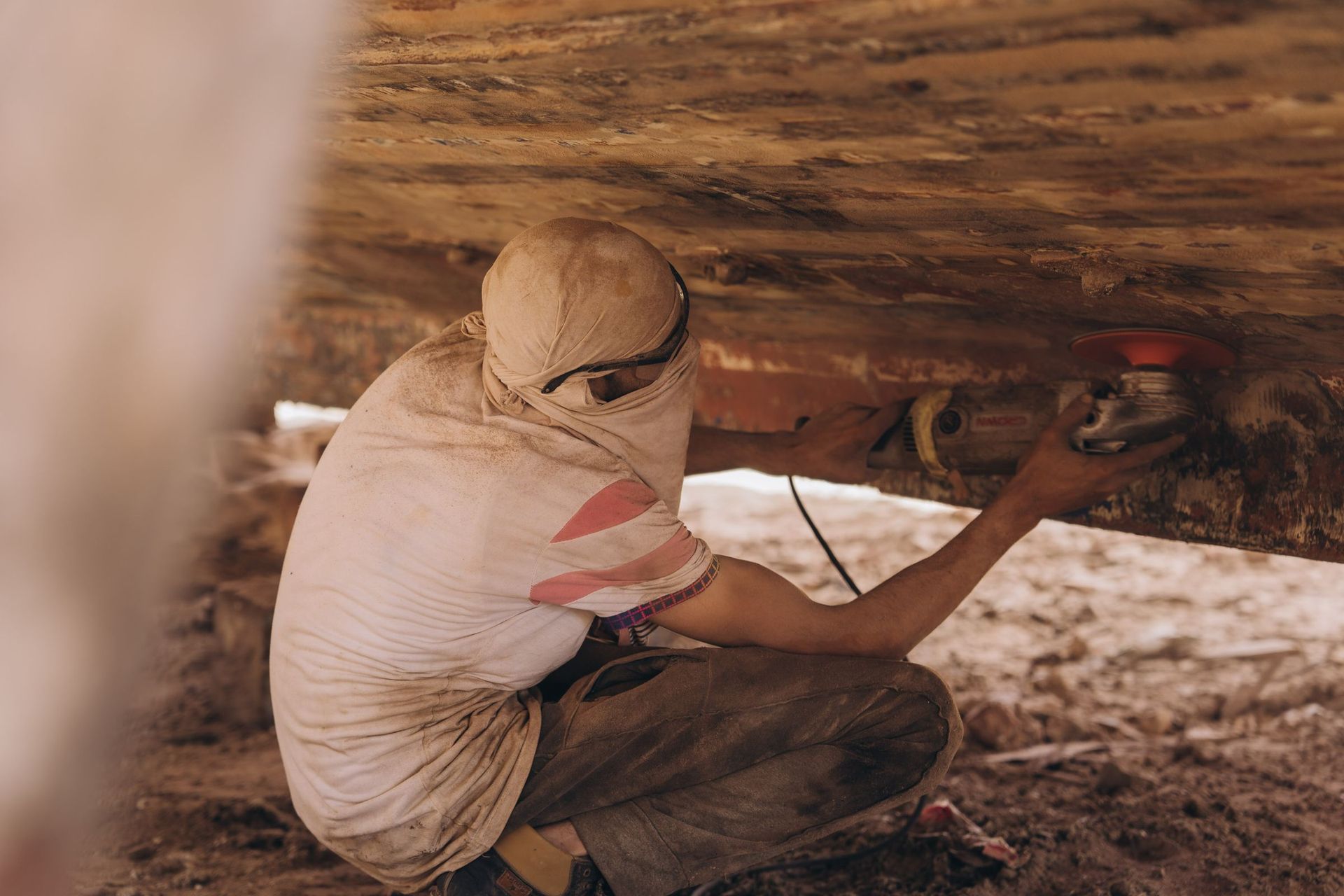
Abrasive blasting is the shop's primary rust-removal method on suitable steel. Compressed air drives media against the surface, and that stream removes rust, old paint, mill scale, oxidation, and failed coatings, leaving behind clean metal with a slight tooth, a profile, that gives the new coating something to grip. The media gets matched to the job: heavier media for thick rust and scale on structural steel, gentler options when a part cannot take an aggressive cut. There is more on media blasting if you are dealing with aluminum, a delicate restoration, or a part that needs a tightly controlled profile.
Because blasting and powder coating are both in-house, the sequence can run as a sandblast and powder coat visit: strip the piece, inspect the bare metal, and coat it while it is still fresh. That order of operations is not just a convenience. It is how the bare metal stays clean long enough to coat.
Compared with chemical stripping, abrasive blasting can remove rust, paint, and scale in a fraction of the time, and without chemical-bath disposal requirements. Blasting still needs proper dust control, and a responsible shop takes that seriously. Hand methods, sanding discs, and wire wheels in the driveway can work on small pieces, but they rarely reach into weld toes, inside corners, and the back sides of tubes, which is exactly where rust tends to hold on and restart.
Why the Coating Should Follow Right After
Once the rust and old coatings are gone, a clock starts. Bare blasted metal is extremely receptive to moisture, and in humid conditions it can begin to flash-rust within hours. That thin orange film is not catastrophic, but it means the freshly prepared surface is already being compromised, and it usually has to be cleaned again before coating. Rust removal, done properly, is a prepared surface waiting for protection. It is not a finished job on its own.
This is why Proper Motion can move straight to powder coating in the same visit: blasting and coating both happen under this roof, so the piece does not sit bare overnight in a truck bed or against a damp garage wall. A piece that leaves the shop bare, sits in a damp garage, and comes back a week later often needs to be cleaned up again before it can be coated.
It helps to be clear about what the coating does. Powder is a durable, weather-resistant finish when it is applied over a clean, sound substrate, and that combination is what makes a restored gate or trailer frame hold up through sprinkler cycles and coastal air. It is not a lifetime guarantee on gates, railings, trailers, or frames, and no coating rescues metal that was already too far gone. The warranty picture is different for qualifying powder-coated wheel finishes, which can carry a limited lifetime warranty against peeling and cracking, subject to written terms and exclusions.
If cost is the next question after rust removal, the powder coating cost guide explains the factors that shape a general-metal quote, including size, condition, and prep. It does not replace an inspection of your actual rust.
Typical Jobs: Gates, Railings, Trailers, and Frames
The pieces that come through a Southern California shop for rust removal follow predictable patterns. Driveway and walk gates that live in sprinkler spray, where the bottom rail catches water every morning and the paint gives up from the inside. Railings along stoops, patios, and stair runs. Trailer frames and tongues with scale creeping along the welds and around bolt holes. Fabricated brackets, stands, and unfinished steel that never got a protective coating in the first place and started blooming orange within months. Larger commercial runs of metal parts come through the same commercial and industrial powder coating process.
Notice where the rust actually shows up, because the pattern is consistent: the bottom rail, where water sits; the hidden backside, where sun never dries it; fastener holes, where the coating was pierced; and weld toes, where the heat-affected zone is more vulnerable. Coastal air and daily sprinkler cycles all accelerate the same process, just at different speeds.
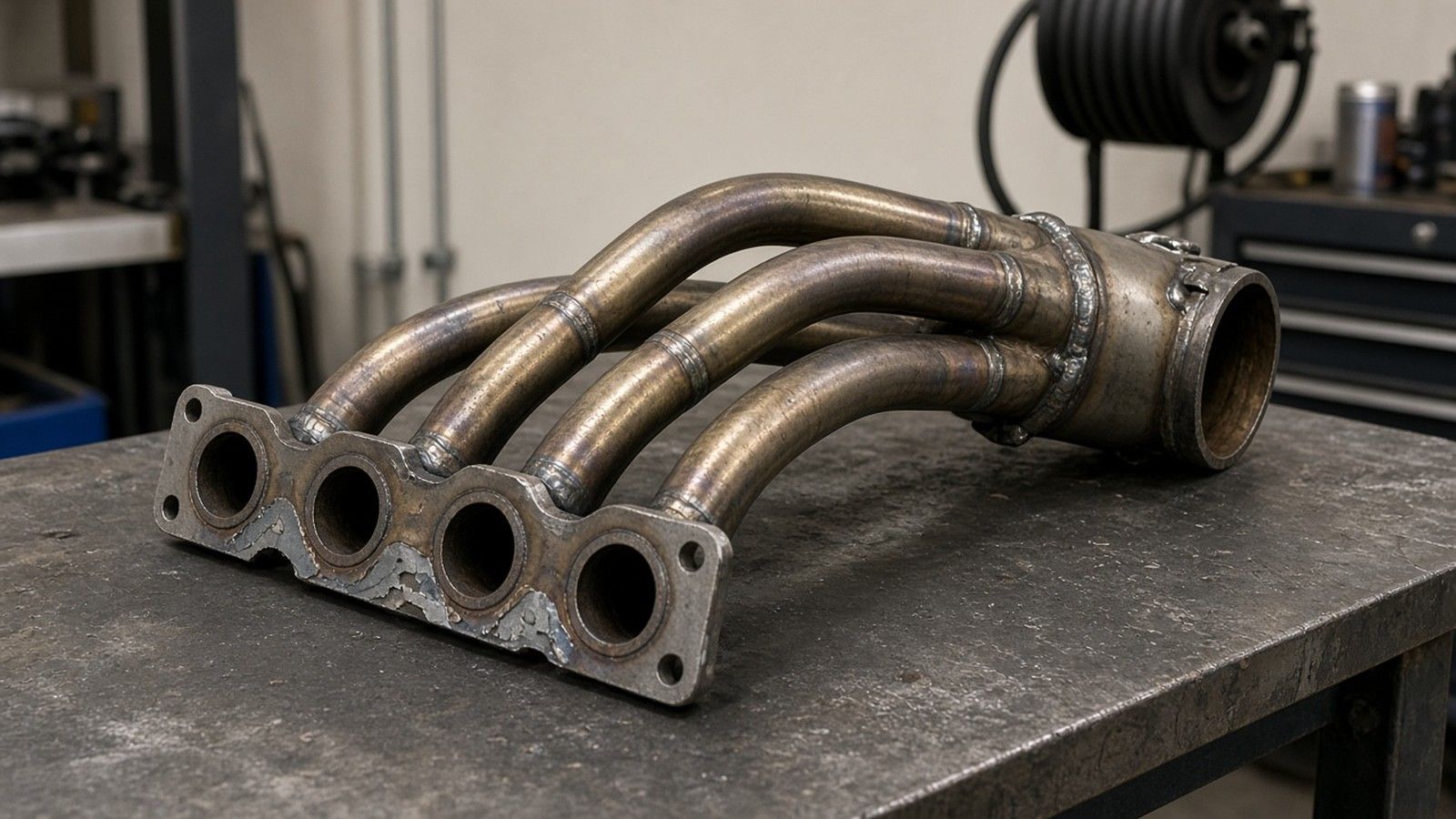
Off-road and automotive metal that is not wheels follows the same inspection logic as everything else: check the thickness, check the welds, and decide whether the piece is sound before you spend anything on prep and finish. Motorcycle and bike frames have their own prep constraints and are covered separately.
What to Photograph Before You Ask for a Quote
A tight estimate starts with clear information, not a vague description that the piece is rusty.
- Daylight photos from several angles, far enough back to show the whole piece and what it is.
- Close-ups of the worst rust, flaking paint, pits, holes, and any welds that look suspect.
- Overall dimensions, or a tape measure laid in the frame of the photo for scale.
- What the piece is and where it lives: a gate on a sprinkler line, a trailer stored outside, a shop stand that gets washed down.
- Any hardware, bearings, rubber, or plastic attached that cannot go through an oven.
- Evidence of prior coatings or repair attempts, including old patch welds and paint layers.
Photos get you close. They do not replace a look at the actual metal. A photo cannot feel a weld flex or measure remaining wall thickness.
Common Mistakes That Make Rust Worse
Most of the rust problems that walk into the shop got worse through one of a handful of avoidable decisions:
- Waiting. Rust moves from a film, to scale, to pitting, and every stage means more blasting and a higher chance that the metal is no longer a candidate.
- Coating or painting over rust. Paint over active corrosion is a lid on a pot still boiling. It looks fine for a season, then blisters and peels, and now the strip job has an extra layer of failed coating on top of the rust.
- Leaving hardware, bearings, rubber, or plastic attached when the piece goes in for stripping. Anything that should not be blasted or baked needs to come off first.
- Leaving a piece bare after blasting, with the plan to coat it "later." Later is when flash rust sets in, and the prep work has to be repeated.
- Shopping only for the lowest rust-removal number without asking what the price includes. A quote that covers stripping but not inspection or a protective coating is only one third of the job, and the other two thirds are where the durability comes from.
When Replacement Is the Better Call
Sometimes the honest answer is that the piece has had it. If blasting would leave a rail too thin to trust, a trailer frame unsafe to load, or a weld that cannot carry its load, then prep and powder do not fix the structure, and no finish makes thin metal thick again. The coating protects what is there. It does not restore what rust has already taken.
If you suspect your piece is in that category, send the photos anyway. An honest "this one is too far gone" before any work starts is worth far more than finding out after the piece is already stripped bare and the problem is undeniable. If you are unsure which side of that line you are on, send the photos anyway. Either answer is better than finding out after the piece is already bare.
Getting a Quote in Santa Fe Springs
If you want rust removal assessed, and, when the metal turns out to be sound, protected with a new finish, the first step is simple: take the photos described above, measure the piece, note anything attached that cannot go through an oven, and send it all through the free quote request. You can also call the shop at (714) 686-2306, or bring the piece by 14000 Rosecrans Ave, Santa Fe Springs, CA 90670. Hours are Monday through Friday 6:00 AM to 7:00 PM, Saturday 6:00 AM to 4:00 PM, and closed Sunday. The shop serves Santa Fe Springs, Whittier, Norwalk, Long Beach, and nearby communities, and the same assessment logic applies whether the piece is a driveway gate, a railing run, or a trailer frame that has been carrying scale along its welds for years.
Recent Posts