Sandblast and Powder Coat Near Me: When Blasting Comes First
Picture a patio set that went chalky after a few Santa Fe Springs summers, rust bleeding through a gate railing where the sprinklers hit every morning, or a trailer part whose finish started flaking the moment the sun found a weak spot. When people look for sandblast and powder coat near me, they usually have one of those parts in hand. Sandblasting and powder coating are not two competing services you have to choose between. They are one sequence. Blasting strips the part down to a clean, prepared surface; powder coating is the finish that goes on next. The pair works or fails together, and the prep step, more than the color you pick, decides how many years the new finish survives.
Below is the decision order that matters at drop-off: whether your part needs blasting, sandblasting versus media blasting, what to disclose for a quote, which photos to send, and how scheduling works at Proper Motion 714, a shop at 14000 Rosecrans Ave in Santa Fe Springs that handles blasting and powder coating under one roof.
What a Sandblast and Powder Coat Shop Actually Does to Your Part
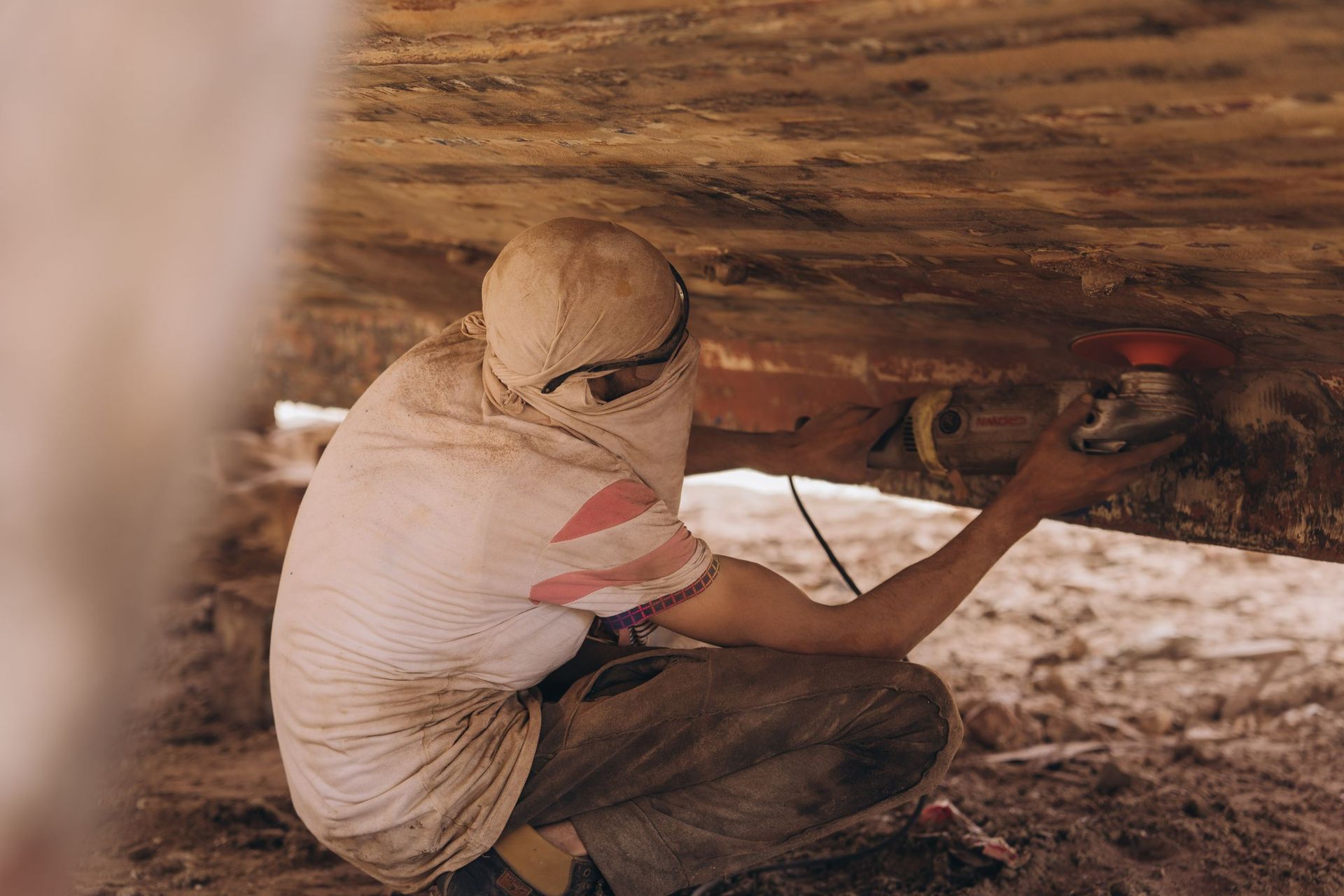
Picture the two steps in sequence. In the first, the part goes into a blast enclosure where abrasive media, pushed by compressed air, strikes the surface and removes old coatings, rust, mill scale, and oxidation. What comes out is uniform bare metal: clean and slightly textured, with any deep corrosion now visible as pitting that was hiding under the old finish. In the second step, electrostatically charged dry powder is sprayed onto the grounded part, the powder clings, and the part goes into an oven where heat melts and cures the powder into a continuous, bonded film. The Powder Coating Institute describes powder coating as a dry finishing process in which electrostatically charged powder is attracted to a grounded part and then cured in an oven, where it reacts chemically into tightly cross-linked molecular chains.
The single most important concept in this whole article is this: powder needs a clean, prepared substrate. It typically bonds best to properly prepared metal, not to failing paint, old powder, or contamination. When powder is applied over a coating that is already failing, contaminated, or poorly adhered, the new layer inherits the weakness underneath. It may look perfect coming out of the oven and then peel in sheets months later, because the failure point was never the powder. It was the boundary between the old coating and the metal. That is why blasting often comes first when rust, old finish, or scale is in the way, and why prep is the step worth paying attention to when you compare quotes.
Understanding the sequence gives you two practical advantages. First, when you get a quote you can ask whether stripping and blast prep are included or whether the quote assumes coating over whatever is on the part now. A cheap quote that skips needed prep is money spent on a finish with a shortened life. Second, you can set realistic expectations: blasting and coating is a shop process, done on a part that comes to the shop, with curing time built in. It is not a field paint job.
When Blasting Comes First: Signs a Part Needs Stripping Before Coating
Signs blasting is the right prep step
Some conditions usually call for stripping before coating:
- Active rust and corrosion, whether it is blooming at fastener holes on a railing or scaling across a trailer frame
- Old paint or old powder that is chalking, peeling, or cracked
- Mill scale, the bluish-gray oxide layer on new hot-rolled steel that interferes with coating adhesion if left in place
- Oxidation on aluminum, the dull, powdery white film that forms on gates, furniture, and wheels over time
- Layered touch-up coatings from years of field repairs, where paint has been brushed over paint over rust
Southern California readers know this cycle well. Sprinklers, sun, and salt air closer to Long Beach accelerate corrosion on gates, railings, and patio furniture, while brake dust and road grime bake onto automotive metal in stop-and-go traffic. A finish that holds up well in one spot can fail much sooner a few miles closer to the water.
One thing worth understanding, because it surprises people: corrosion often hides under intact-looking coatings. A gate panel may look fine from the driveway, and blasting reveals pitting that had been spreading under the paint for years. This is a feature of the process, not a problem with it. Blasting shows the true condition of the metal before any color goes on, which is far better than discovering it after the coating fails. So, can you powder coat over old paint? Sometimes shops attempt it on sound coatings, but coating over failing or contaminated finishes risks adhesion, and stripping is usually the safer path. Proper Motion's blasting process ends with the same point: bare blasted metal can begin to flash-rust within hours in humid conditions, so the shop recommends moving straight to powder coating, which it can do in the same visit because both services are in-house.
When a part may not need full blasting
Not every part needs the full treatment. New bare-steel fabrication with no coatings to remove, clean aluminum with only light oxidation, and parts with a genuinely sound existing finish may only need cleaning and light prep before powder goes on. Live shop guidance matches that: blasting is often useful for rust, scale, old paint, or failing coating, but it is not required for every project. The determination is made by inspection, not by rule. The shop looks at the part, its material, and its condition, and recommends a prep path. Sometimes that path includes blasting; sometimes it does not. What you should expect from any competent shop is that the decision is explained to you, not made silently.
Sandblasting vs Media Blasting: Which Prep Method Fits Your Part
Both processes use abrasive media and compressed air. The difference is in how aggressive the abrasive is and how the settings are tuned to the part.
Sandblasting, in the everyday sense, is the heavy-duty end. Proper Motion's media list starts with aluminum oxide and steel grit, aggressive cutting media that remove heavy rust, mill scale, old paint, and weld slag and leave an angular anchor profile for powder adhesion. Trailer frames, structural steel, heavily corroded gates, and fabricated parts with years of buildup are classic jobs for that end of the range.
Media blasting covers the gentler end. Glass bead cleans without cutting aggressively and leaves a smooth satin surface on aluminum, stainless, and decorative parts, and walnut shell is listed for delicate parts, chrome, and soft alloys. Those are the choices for aluminum parts and wheels, thin sheet metal, ornate fabrication, and restoration pieces where fine lines, threads, and mating surfaces need to survive prep. An aggressive blast that cleans a trailer frame beautifully can eat detail on a cast aluminum piece; media choice and pressure get matched to the part, not the other way around.
This is why inspection comes first, and why "not every part is a candidate for aggressive sandblasting" is a real constraint rather than shop hedging. The wrong abrasive at the wrong pressure can warp thin metal, erode edges, and round over details that cannot be restored. The shop's sandblasting and media blasting page covers both ends of the range, along with a blast cabinet and open blast area for parts of different sizes, and the right question to ask when you drop off is not "can you blast this" but "which blast does this part need."
One note on safety, because it reflects on how a shop operates: professional abrasive blasting generates dust, and OSHA's fact sheet on abrasive blasting materials covers the dust and toxic-metal hazards involved and the engineering controls and protective equipment shops are expected to use (OSHA). A shop that takes dust containment and protection seriously is a shop that takes the work seriously.
Common Projects That Pair Blasting with Powder Coating
Outdoor and commercial metal
Gates, railings, fencing, patio furniture, trailers, and fabricated steel are the classic blast-and-coat jobs, and for a simple reason: they live outdoors. Sun, sprinklers, and salt air leave paint chalking and rust bleeding through, and repainting over that damage just starts the clock on the next failure. Stripping to bare metal and applying a cured powder finish resets the part properly. Readers in Whittier, Norwalk, Downey, and the other cities on the service areas page are a short drive from the shop. For gates, railings, patio furniture, and fabricated steel, the shop's general powder coating service is the right starting point, and its 25-foot oven fits most commercial and industrial jobs.
Automotive, motorcycle, and off-road parts
On the automotive side, scuffed, peeling, or brake-dust-stained wheels are frequent blast-and-coat candidates; the full wheel process, including tire dismounting, remounting, balancing, and correction of suitable curb rash, is covered on the wheel powder coating page and is worth its own read if wheels are your job. Beyond wheels, motorcycle frames, off-road components, brackets, and suspension parts come through regularly, usually with rust, old powder, or road grime that has to come off before color goes on. The prep logic is identical to outdoor metal: clean substrate first, finish second.
Powder coating vs paint: the short version
Powder generally produces a harder, more chip- and chemical-resistant finish than liquid paint, because the cured film is tougher by nature. Liquid paint's advantages are field touch-up and the ability to coat items that cannot come to a shop and go through an oven, such as fencing already installed on site. The practical decision rule: if the part can come to the shop and go through the cure process, powder is usually the stronger long-term finish for outdoor and daily-driver use. A deeper powder-versus-paint comparison deserves its own article, so we will leave it there.
Choosing Color, Texture, and Gloss for a Blasted-and-Coated Part
For general metal, Proper Motion lists matte, satin, gloss, and textured finish profiles, and its site also mentions metallic and specialty colors. Bring reference photos or a color direction to the estimate so the shop can discuss what suits the part. A few practical notes:
- Gloss and satin clean up easily with mild soap and water, which makes them practical on patio furniture and wheels.
- Textured finishes help hide minor surface imperfections, which matters on gates, railings, and fabricated steel where some texture in the metal survives even a thorough blast.
- Metallic and specialty colors suit custom and show work, where the finish is the point rather than just protection. Confirm availability with your quote.
One insight worth internalizing: the same gloss black reads differently over properly blasted clean metal than over marginal prep. A high-gloss finish is honest; it shows off good prep and exposes bad prep. Finish quality is prep quality. On outdoor parts, UV exposure and coastal salt influence how any finish ages over time, and manufacturer and trade-association guidance is the right reference for how specific formulations hold up, rather than blanket durability claims. Product requirements and project conditions vary, so treat finish choice as a conversation with the shop, not a catalog order.
What Pricing Depends On
Pricing is quoted after inspection because size, material, condition, finish, and complexity all change the work. A small, clean bracket and a heavily corroded gate panel are different jobs even if the color is the same. Proper Motion's general powder coating page lists the drivers: size, quantity, condition, old finish, corrosion, preparation, masking, and finish selection. Wheels follow their own list, including wheel size and width, construction, curb-rash correction, and tire-service scope. The shop confirms scope and final price after review, so the way to get a real number is to request a quote with photos and dimensions. Be wary of any shop that quotes a complex part sight unseen. The more useful buyer takeaway is this: compare quotes on the prep included, not on price alone. That single habit filters out most bad quotes.
How to Plan Your Drop-Off
Photos to send for a quote
Photos get you a faster, more accurate quote than a phone description. Take overall shots of the item, close-ups of rust, peeling, damage, or previous coatings, and something for scale so the shop can gauge size. For wheels, shoot both the face and the barrel, since barrel condition and curb rash on the lip affect the work. Add the material, basic dimensions, the next finish you want, and any areas that must remain untouched, and include your preferred callback number or email so the shop can reply.
What to disclose before you arrive
Disclosure keeps your quote and your turnaround honest, because surprises found after blasting change scope and timing. Surface and condition items to mention up front:
- Rust-through, meaning holes or metal that flakes and crumbles, not just surface rust
- Thin or delicate sections that could be affected by aggressive blasting
- Existing chrome or unknown prior coatings, which need their own handling plan
- Multiple old coatings from years of repainting
- Prior paint types if you know them, any prior welds or repairs on outdoor metal, and non-metal attachments that need removal
For wheels specifically, suitable curb rash can be corrected during wheel prep, but bends, cracks, and other structural issues must be disclosed and inspected, and TPMS sensors and valve stems affect tire service logistics. The general principle holds for every part: minor cosmetic smoothing is different from structural repair, and no shop can honestly promise the latter without inspecting the part.
Hours, turnaround, and scheduling
The shop is at 14000 Rosecrans Ave, Santa Fe Springs, CA 90670, open Monday through Friday, 6:00 AM to 7:00 PM, and Saturday, 6:00 AM to 4:00 PM. Blasting turnaround depends on the part's size, condition, masking needs, required surface profile, and the shop schedule, and powder coating afterward adds its own steps. Proper Motion's same-day program applies only to qualifying wheel projects dropped off during the designated morning window; blast-and-coat metal work gets a project-specific schedule after review. Ask the shop to confirm both the blasting completion date and the finish timeline when you receive your quote.
Caring for the Finished Coating
A cured powder finish is durable and resistant, but it is not a lifetime guarantee, and honest care guidance keeps it looking right for years. Wash with mild soap, water, and a soft cloth; avoid abrasive pads, scouring pads, and harsh solvents, which can dull or damage the surface. Follow manufacturer care guidance for the specific finish on your part.
Watch for the warning signs that a finish needs attention: chips or scratches that penetrate to bare metal, rust bloom at edges and fastener holes, and dulling or chalking after extended outdoor exposure. Chips that expose bare metal should be addressed before corrosion starts, especially closer to the coast where salt accelerates everything.
How to Choose a Shop When You Search "Sandblast and Powder Coat Near Me"
The search itself gives you a checklist. When you are evaluating shops near you, ask:
- Does the quote include stripping and blast prep, or only coating?
- Does the shop inspect the part before quoting?
- Can it handle your part's size and material?
- Is turnaround stated honestly, including what same-day does and does not cover?
- Can the shop explain finish options in plain terms?
- Is the location actually convenient? Santa Fe Springs sits near Whittier, Norwalk, and Downey, which puts the shop on a sensible route for many drivers combining drop-off with work or errands.
The common buyer mistakes are the mirror image of that list. Comparing quotes that skip prep, then losing the money when the coating peels over contamination. Choosing a shop from an Instagram color alone without ever asking about surface prep. Assuming same-day applies to every job, when it covers only qualifying wheel projects. Leaving TPMS sensors, valve stems, or structural damage undisclosed on wheel jobs. Expecting structural wheel repair from a coating shop.
On the trust question, ask to see how a shop handles prep, not just finished photos. Whatever shop you choose, the prep question is the one that separates a finish that lasts from one that peels.
Next Steps: Getting a Quote and Planning Drop-Off
Bring the part, or photos of it, and let the inspection answer the prep question before you commit to a color. Request a free quote with photos and dimensions, call (714) 686-2306, or email propermotion714@gmail.com. The shop responds to quote requests within one business day, and drop-off is at 14000 Rosecrans Ave, Santa Fe Springs, CA 90670.
Recent Posts